BEEP is the rider-facing brand of Trans-Sahara Industries Ltd. Accra, Ghana.Visit Trans-Sahara Industries →
Ninety-second swap. No charging wait.

Beep Energy
× TMG

Selling electric motorcycles into a market with unreliable grid power is selling a problem. Selling energy in ninety-second increments, on the route, is selling a solution — and it is the thing that makes the financing enforceable.
90 Second Swap
Tap and ride away
8 Packs per Cabinet
Modular to 16
Solar Assisted
Rides out a power cut
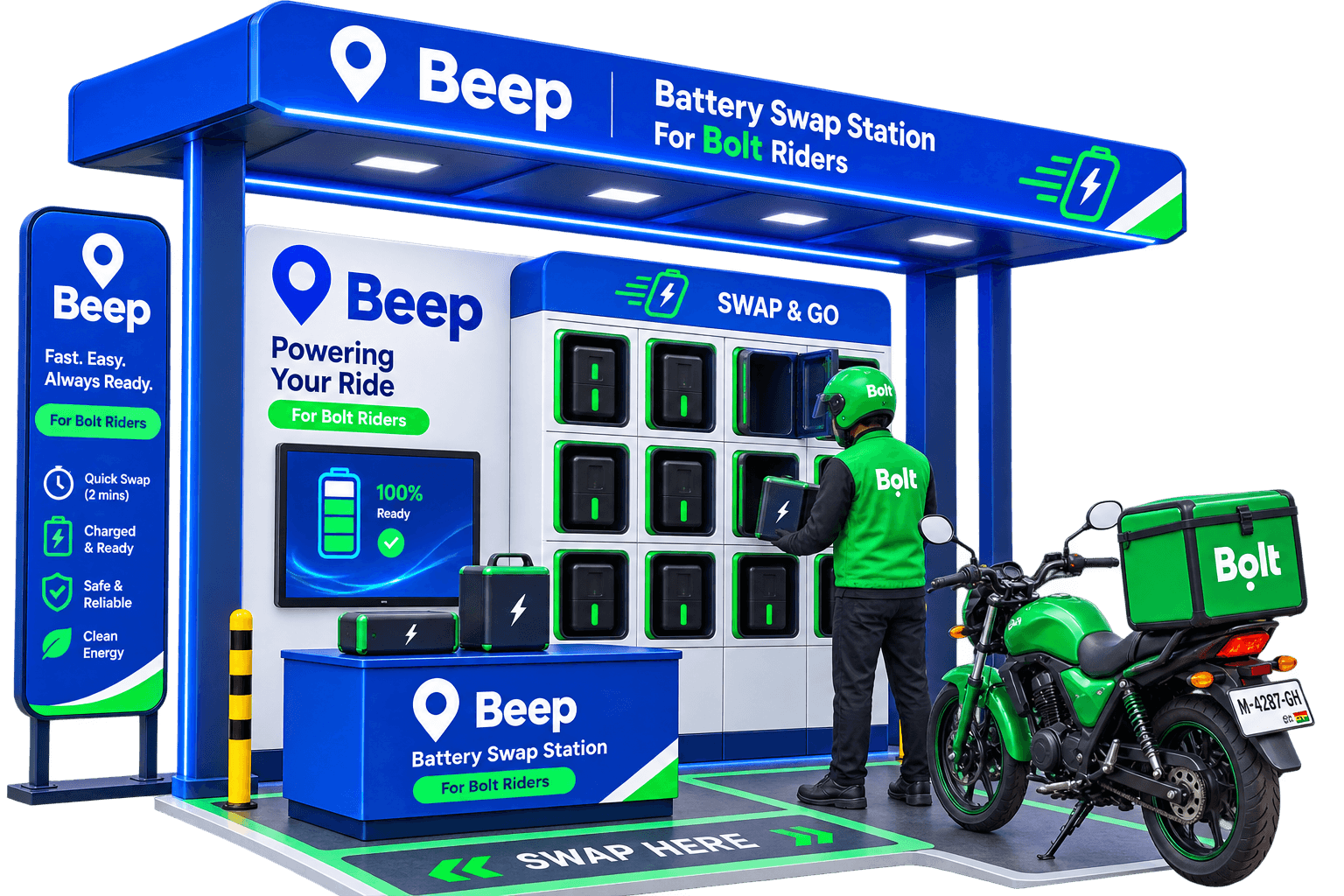
BEEP battery swap station with a rider exchanging a pack
BEEP Swap Station
GH₵ 35 / swap
Illustrative figure
90 sec
Average swap
tap to ride away
8
Packs per cabinet
modular to 16
~52×
Swaps per rider / month
modelled, six-day week
0
Charging downtime
rider never waits on a charge
How a swap works

Four steps, ninety seconds

Charging takes a commercial rider off the road for a shift they cannot afford to lose. Swapping takes them off for the length of a greeting.

01

Tap

The rider taps a BEEP tag on the station reader. No phone, no data bundle, no app. This is the most frequent event in the system, so it has the fewest dependencies.
02

Dock

The depleted pack goes into an open bay. The cabinet reads its state of health and starts charging it for the next rider.
03

Release

The station checks entitlement and releases a charged pack. Energy and asset payment are both settled in that one price.
04

Ride

Back on the route in about ninety seconds. The swap is written to the ledger and, offline or not, syncs when the station reconnects.

Swap duration is a design target. Real-world times depend on cabinet dwell, queue length at peak and pack thermal state, none of which have been measured in a live pilot yet.

Hardware

Cabinet, canopy, pack

A station is a solar-assisted charging cabinet, a tag reader and a grid connection. It is deliberately unglamorous — it has to survive a Ghanaian wet season and a power cut in the same week.

Offline-first
The station keeps operating through network and grid outages using signed local entitlements, then reconciles when it reconnects. A rider is never stranded by our infrastructure.
Solar-assisted
Canopy PV shaves peak-tariff draw and keeps a minimum number of bays charging when the grid drops.
Modular bays
Eight bays as standard, expandable to sixteen as route density grows. Capacity follows demand instead of leading it.
Host-operated
Fuel stations, shops and lorry parks host cabinets. We supply and maintain the hardware; the host supplies land, power and footfall.
BEEPBEEP
Rollout

Density before coverage

A thin network across the whole city is worse than useless — a rider who cannot find a pack on their route will not switch. We saturate one corridor before opening the next.

Illustrative figures
GULF OF GUINEAKaneshieCircleOsuDansomanLegonAchimotaTeshieKasoa RdTemaMadinaOfankorPhase 1 · pilot corridorPhase 2 · density buildPhase 3 · regional
Phase 1
Pilot corridor
4 stations · Kaneshie–Circle–Osu–Dansoman. Enough density that a rider on that loop is never more than 10 minutes from a charged pack.
Phase 2
Density build
Add Achimota, Legon and Teshie as rider count justifies. Utilisation per cabinet is the gate, not the calendar.
Phase 3
Regional
Tema and the Kasoa road. These are freight and inter-city corridors with different duty cycles and different economics.

Station locations shown are indicative planning targets on a stylised map, not signed sites or exact geography. Rollout depends on host agreements, grid connections and confirmed station capital cost.

Energy pricing

One price. Two jobs.

A rider pays a single swap price. Inside it, one portion buys today's energy and one portion buys a piece of the motorcycle. The rider never receives a separate loan bill, because there is never a separate collection event.

Energy component
Covers electricity, cabinet depreciation, host fee and pack cycle life.
~55%
Asset component
Amortises the motorcycle. Swept daily to the ring-fenced lender facility.
~45%
Illustrative figuresSplit is a modelled starting point. Actual allocation is set per cohort with the lending partner.
Station partners

You have the land. We have the cabinet.

Fuel stations, provision shops, lorry parks and workshops on a busy route are the natural hosts. You supply space, a grid connection and footfall. We supply, install and maintain the hardware and pay a per-swap host fee.

You provide
≈6 m² of secured space, a metered connection, daytime access
We provide
Cabinet, canopy, packs, install, maintenance, insurance
You earn
A fee on every swap, plus the traffic swapping riders bring