BEEP is the rider-facing brand of Trans-Sahara Industries Ltd. Accra, Ghana.Visit Trans-Sahara Industries →
Fleet orders open. Depot swapping available.

Beep Motors
× Bolt

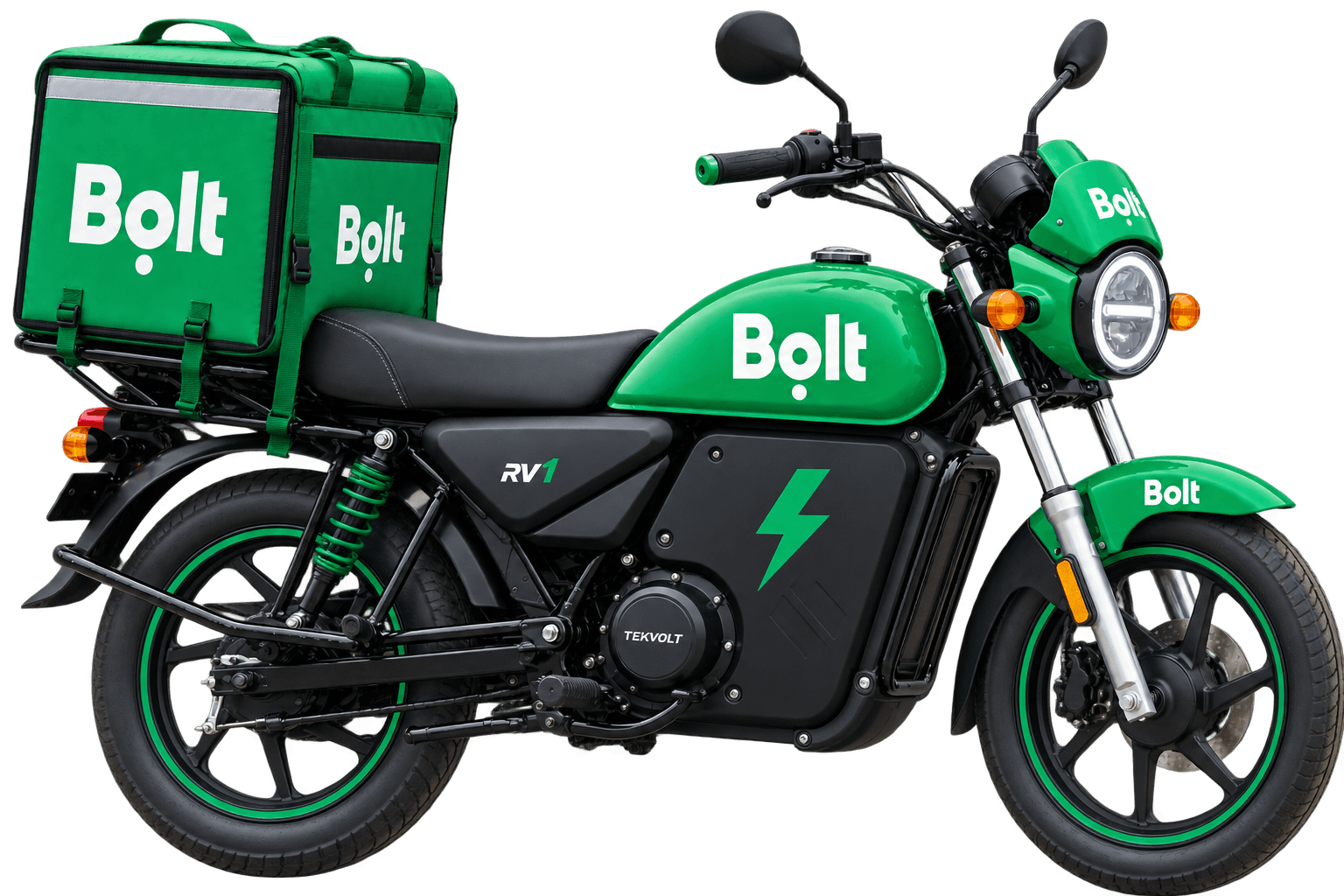
The Okada bike carries a passenger. These carry a business. Same swap network, same pack, twice the load — built for the traders and delivery fleets moving goods on the same roads.
320 kg Payload
Rated, not hoped
Twin BEEP Packs
Same swap network
Fleet Ready
Depot swapping
BEEP electric delivery motorcycle in Bolt livery, side profile
T22
GH₵ 102 / day
Illustrative figure
The problem

Three reasons the paper doesn't get written

Every rider-financing programme in the region dies on one of these. Not on demand — demand is enormous. On enforceability.

01

No credit file

Thin-file or no-file borrowers. There is nothing for an underwriter to underwrite, so the loan is priced for the worst case or not offered.
02

No practical recovery

Repossessing a motorcycle from a rider who does not want to be found costs more than the motorcycle is worth.
03

No first-loss cover

Without a guarantee sitting underneath, a lender writing thin-file paper takes the whole loss. Guarantees have been withdrawn from this market, not added.
The mechanism

Enforcement lives in the station

A motorcycle without a charged pack is a very heavy bicycle. That single fact replaces the entire apparatus of credit scoring, collections and repossession.

Collateral that comes back daily

The rider hands us the collateral roughly fifty times a month, voluntarily, because they need the next pack. No other asset class gets that.

The swap log is the credit file

The underwriting question stops being “will this man repay?” and becomes “is this man riding today?” — a question the ledger answers every morning.

Repayment inside the energy price

There is no separate loan instalment to collect, chase or forget. If a rider earns, the rider pays. Collection is never a distinct act.
What this deliberately removes
Credit bureau integrationMobile-money transaction history vendorRide-hailing data-sharing agreementGSM immobiliser / firmware kill switchField collections teamOrigination underwriting

Each of these is an integration, a vendor contract and a point of failure. Putting enforcement in the station removes all six from version one — which is the difference between a programme that ships this year and one that stays in procurement.

Ownership calculator

Idle risk, not credit risk

This is the model in miniature. A rider's route determines whether the paper performs — so the portfolio is cohorted by route, and the metric that matters is PAR-3, not PAR-30.

Illustrative figures
Rider inputs

Move the sliders to see how a rider's route shapes the term. Note what changes the answer most: it is not interest rate or credit score, it is idle days.

GH₵ 35
6 days
45%
10%
49%AFTER 1 YR
Time to full ownership
24.4months
on a GH₵ 18,000 vehicle
Rider pays per day
GH₵ 70
Petrol rider pays
GH₵ 65 / day
Weekly energy
GH₵ 208
Weekly asset payment
GH₵ 170
Bankable. At this utilisation the asset amortises inside a term a lender will write, and the rider's daily outlay stays close to what they already spend on fuel.

Vehicle price, swap price, energy share and petrol comparison are modelled placeholders pending confirmed inputs from Trans-Sahara Industries: landed vehicle cost, pack cost, station capital cost and measured pilot utilisation. This calculator is a demonstration of method, not an offer of finance or a quotation.

Under the hood

One swap. Three books.

Every tap at a station writes to three ledgers at once. Keeping them separate is what lets a lender fund the asset book alone, without taking exposure to the energy business.

Book 1
Rider wallet
What the rider has paid in, what is owed, what is owned. The number the rider sees in the app: “74% yours.”
Book 2
Energy book
Electricity, host fees, cabinet depreciation, pack cycle life. Operating business, funded by operating cash.
Book 3
Asset book
The amortising claim on the motorcycle. Swept daily to the lender facility. Ring-fenced and separately reportable.
For fleet owners

Own ten. Or a hundred.

Fleet operators already finance riders informally, badly, on paper, with no visibility. The fleet console gives an owner per-rider utilisation, per-route cohort performance and daily reconciliation across the whole book.

Per-rider swap and earnings view, updated at every tap
Route cohorts, so an underperforming corridor is visible in days
Daily reconciliation instead of a monthly argument
Sub-financing: pass Swap-to-Own terms through to your own riders
PAR-3
Portfolio metric
not PAR-30 — daily cash, daily signal
Daily
Lender sweep
asset column, automated
Route
Cohort dimension
not credit grade
~52×
Enforcement points / month
every swap is a checkpoint
For lenders and guarantors

What you are actually funding

Not consumer credit. A secured, daily-amortising claim on an income-producing asset whose fuel supply you control, reported on a three-day arrears clock.

Security

Physical control of the energy supply, exercised ~52 times a month per rider.

Signal latency

Arrears visible within 72 hours, not at the end of a month.

Segmentation

Cohorts by route and duty cycle — the variables that actually drive default.

Reporting

Ring-fenced asset book, daily sweep, standard facility reporting.
Stated plainly

This structure reduces the need for a first-loss guarantee. It does not eliminate it. Until a pilot cohort has produced twelve months of measured repayment behaviour, a lender is still pricing an unproven asset class in an unproven operating environment — and should say so. We would rather show you that on the first page than have you find it on the fortieth.

Request the modelIllustrative figures